Urgences neurologiques

Thrombectomie mécanique chez le sujet âgé : données, spécificités techniques et enjeux éthiques

icon réservé aux abonnésArticle réservé aux abonnés
Victor Dumas Aujourd'hui à 7:00 Lecture 10 min.

Résumé

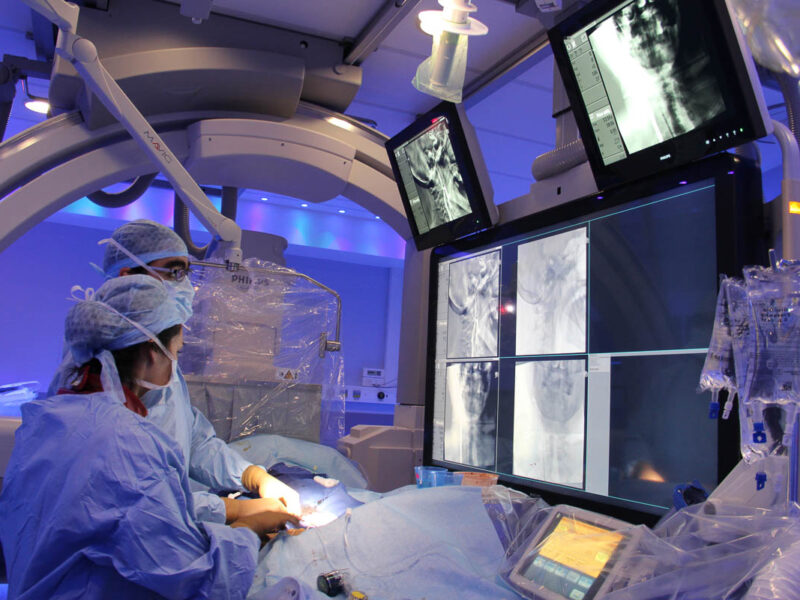
Avec près de deux patients sur cinq âgés de plus de 80 ans au moment de leur AVC ischémique, la thrombectomie mécanique chez le sujet âgé est au cœur de la pratique de tout radiologue interventionnel. L’âge est un facteur pronostique mais, isolément, ne contre-indique pas la procédure. Ce sont aussi l’autonomie antérieure, le volume de l’infarctus et le contexte médical global qui déterminent l’indication à une stratégie de recanalisation. La procédure doit cependant être adaptée, et la décision d’indication intègre des dimensions éthiques du consentement, de l’obstination déraisonnable, mais aussi le principe de réalité des conditions de travail propres à chaque structure de soins.

Présenter un patient de 94 ans pour une thrombectomie n’est pas toujours évident. Il n’y a pas de contre-indication formelle, mais parfois une réticence, difficile à objectiver, qui conduit souvent à se restreindre pour « éviter de déranger ». Cette posture, compréhensible humainement, n'est plus défendable scientifiquement. Le vieillissement démographique est déjà le quotidien en salle de thrombectomie. En Europe, la part des AVC ischémiques survenant après 80 ans approche les 40 % [1-2], et cette proportion va continuer à croître. La question n'est plus de savoir si on doit thrombectomiser les personnes âgées, mais de savoir positionner le curseur de comment et pour qui le faire.

Ce que disent les données des essais randomisés

Un bénéfice reconnu après 80 et 90 ans

La méta-analyse HERMES a poolé les données individuelles des cinq grands essais randomisés qui ont permis de valider scientifiquement la thrombectomie mécanique (TM). Les patients de 80 ans ou plus ont représenté 15 % de l’ef
Il vous reste 93% de l’article à lire

Docteur Imago réserve cet article à ses abonnés

S'abonner à l'édition
  • Tous les contenus « abonnés » en illimité
  • Le journal numérique en avant-première
  • Newsletters exclusives, club abonnés

Abonnez-vous !

Docteur Imago en illimité sur desktop, tablette, smartphone, une offre 100% numérique

Offre mensuelle 100 % numérique

23 €

par mois

S’abonner à Docteur Imago

Auteurs

Victor Dumas

Radiologue Service de radiologie, CHU de Poitiers

Déclaration des liens d'intérêts

Aucun lien d’intérêts déclaré par le(s) auteur(s) de cet article.

Bibliographie

  1. Gabet A, Béjot Y, Touzé E, et al (2024) Epidemiology of stroke in France. Archives of Cardiovascular Diseases 117:682–692. https://doi.org/10.1016/j.acvd.2024.10.327.
  2. Béjot Y, Bailly H, Durier J, Giroud M (2016) Epidemiology of stroke in Europe and trends for the 21st century. La Presse Médicale 45:e391–e398. https://doi.org/10.1016/j.lpm.2016.10.003.
  3. Hirsch S, Kostev K, Tanislav C, Hammed A (2025) Acute Ischemic Stroke Treatment in Germany (2015–2023): Nationwide Trends in Thrombolysis and Thrombectomy by Age and Sex. Brain Sciences 15:832. https://doi.org/10.3390/brainsci15080832.
  4. Goyal M, Menon BK, Van Zwam WH, et al (2016) Endovascular thrombectomy after large-vessel ischaemic stroke: a meta-analysis of individual patient data from five randomised trials. The Lancet 387:1723–1731. https://doi.org/10.1016/S0140-6736(16)00163-X.
  5. Nogueira RG, Jadhav AP, Haussen DC, et al (2018) Thrombectomy 6 to 24 Hours after Stroke with a Mismatch between Deficit and Infarct. N Engl J Med 378:11–21. https://doi.org/10.1056/NEJMoa1706442.
  6. Dittrich TD, Sporns PB, Kriemler LF, et al (2023) Mechanical Thrombectomy Versus Best Medical Treatment in the Late Time Window in Non-DEFUSE-Non-DAWN Patients: A Multicenter Cohort Study. Stroke 54:722–730. https://doi.org/10.1161/STROKEAHA.122.039793.
  7. Yoshimura S, Sakai N, Yamagami H, et al (2022) Endovascular Therapy for Acute Stroke with a Large Ischemic Region. N Engl J Med 386:1303–1313. https://doi.org/10.1056/NEJMoa2118191.
  8. Bendszus M, Fiehler J, Subtil F, et al (2023) Endovascular thrombectomy for acute ischaemic stroke with established large infarct: multicentre, open-label, randomised trial. The Lancet 402:1753–1763. https://doi.org/10.1016/S0140-6736(23)02032-9.
  9. Costalat V, Jovin TG, Albucher JF, et al (2024) Trial of Thrombectomy for Stroke with a Large Infarct of Unrestricted Size. N Engl J Med 390:1677–1689. https://doi.org/10.1056/NEJMoa2314063.
  10. Goda T, Oyama N, Kitano T, et al (2020) Prestroke Conditions of Acute Ischemic Stroke Patients are Associated with Functional Outcome after Mechanical Thrombectomy. Journal of Stroke and Cerebrovascular Diseases 29:104540. https://doi.org/10.1016/j.jstrokecerebrovasdis.2019.104540.
  11. Kurisu K, Sakurai J, Wada H, et al (2022) Effects of clinical outcomes by modification of patient selection protocol based on premorbid independence for mechanical thrombectomy in older adult patients. Brain Circulation 8:24–30. https://doi.org/10.4103/bc.bc_73_21.
  12. Slawski DE, Salahuddin H, Shawver J, et al (2018) Mechanical Thrombectomy in Elderly Stroke Patients with Mild-to-Moderate Baseline Disability. Intervent Neurol 7:246–255. https://doi.org/10.1159/000487333.
  13. Schönenberger S, Uhlmann L, Hacke W, et al (2016) Effect of Conscious Sedation vs General Anesthesia on Early Neurological Improvement Among Patients With Ischemic Stroke Undergoing Endovascular Thrombectomy: A Randomized Clinical Trial. JAMA 316:1986. https://doi.org/10.1001/jama.2016.16623.
  14. Simonsen CZ, Yoo AJ, Sørensen LH, et al (2018) Effect of General Anesthesia and Conscious Sedation During Endovascular Therapy on Infarct Growth and Clinical Outcomes in Acute Ischemic Stroke: A Randomized Clinical Trial. JAMA Neurol 75:470. https://doi.org/10.1001/jamaneurol.2017.4474.
  15. Simonsen CZ, Yoo AJ, Sørensen LH, et al (2018) Effect of General Anesthesia and Conscious Sedation During Endovascular Therapy on Infarct Growth and Clinical Outcomes in Acute Ischemic Stroke: A Randomized Clinical Trial. JAMA Neurol 75:470. https://doi.org/10.1001/jamaneurol.2017.4474.
  16. Schönenberger S, Hendén PL, Simonsen CZ, et al (2019) Association of General Anesthesia vs Procedural Sedation With Functional Outcome Among Patients With Acute Ischemic Stroke Undergoing Thrombectomy: A Systematic Review and Meta-analysis. JAMA 322:1283. https://doi.org/10.1001/jama.2019.11455.
  17. Shan W, Xu M, Gong X, et al (2026) General anesthesia vs. non-general anesthesia for elderly stroke patients treated with mechanical thrombectomy. Front Neurol 17:1753649. https://doi.org/10.3389/fneur.2026.1753649.
  18. Lai Y-J, Peng S-H, Lai W-J, et al (2023) Predictors of 30-day mortality after endovascular thrombectomy for large vessel occlusion in the elderly. Interv Neuroradiol 29:37–42. https://doi.org/10.1177/15910199211069259.
  19. Chen H, Colasurdo M, Schrier C, et al (2024) Optimal Angiographic Goal and Number of Passes for Octogenarians Undergoing Endovascular Stroke Thrombectomy. World Neurosurgery 186:e283–e289. https://doi.org/10.1016/j.wneu.2024.03.123.
  20. Dumas V, Kaesmacher J, Ognard J, et al (2022) Carotid artery direct access for mechanical thrombectomy: the Carotid Artery Puncture Evaluation (CARE) study. J NeuroIntervent Surg 14:1180–1185. https://doi.org/10.1136/neurintsurg-2021-017935.
  21. Ifergan H, Dargazanli C, Ben Hassen W, et al (2024) Rescue intracranial permanent stenting for refractory occlusion following thrombectomy: a propensity matched analysis. J NeuroIntervent Surg 16:115–123. https://doi.org/10.1136/jnis-2022-020012.
  22. Adcock AK, Schwamm LH, Smith EE, et al (2022) Trends in Use, Outcomes, and Disparities in Endovascular Thrombectomy in US Patients With Stroke Aged 80 Years and Older Compared With Younger Patients. JAMA Netw Open 5:e2215869. https://doi.org/10.1001/jamanetworkopen.2022.15869.
  23. Moreu M, Scarica R, Pérez-García C, et al (2023) Mechanical thrombectomy is cost-effective versus medical management alone around Europe in patients with low ASPECTS. J NeuroIntervent Surg 15:629–633. https://doi.org/10.1136/jnis-2022-019849.
  24. Inaba T, Sakuma M, Sakakibara F, et al (2025) Quality-adjusted Life Years and Costs of Mechanical Thrombectomy for Very Elderly Patients with Acute Ischaemic Stroke. Neurol Med Chir(Tokyo) 65:52–60. https://doi.org/10.2176/jns-nmc.2024-0157.
  25. Lim J, Monteiro A, Ruggiero N, et al (2023) Mechanical Thrombectomy Versus Best Medical Management for Acute Ischemic Stroke in Elderly Patients: A Cost-Effectiveness Analysis. World Neurosurgery 175:e730–e737. https://doi.org/10.1016/j.wneu.2023.04.012.
  26. Rauchenzauner M, Ernst F, Hintringer F, et al (2009) Arrhythmias and increased neuro-endocrine stress response during physicians’ night shifts: a randomized cross-over trial. European Heart Journal 30:2606–2613. https://doi.org/10.1093/eurheartj/ehp268
  27. Toivonen L, Helenius K, Viitasalo M (1997) Electrocardiographic Repolarization During Stress From Awakening on Alarm Call. Journal of the American College of Cardiology 30:774–779. https://doi.org/10.1016/S0735-1097(97)00222-2.
  28. Kader M, Selander J, Andersson T, et al (2022) Night and shift work characteristics and incident ischemic heart disease and atrial fibrillation among healthcare employees – a prospective cohort study. Scand J Work Environ Health 48:520–529. https://doi.org/10.5271/sjweh.4045.
  29. Bouslama M, Navi B, Mir S, et al (2022) Abstract WP57: Association Between Stroke Presentation During Off-hours And Mechanical Thrombectomy. Stroke 53:. https://doi.org/10.1161/str.53.suppl_1.WP57.

Discussion

Aucun commentaire

Laisser un commentaire

Sur le même thème

Le fil Docteur Imago

29 Juil

7:47

Les adolescents sportifs présenteraient des différences spécifiques à la région, à la zone et à la couche dans les temps de relaxation du cartilage du genou T2 par rapport aux non sportifs. Cette cartographie pourrait permettre de détecter les cartilages à risques avant que des dommages structurels visibles ne se produisent. (Etude)
28 Juil

15:00

11:00

Un score incluant des variables extraites des examens baseline de TEP-TDM au [18F]FDG et au [68Ga]Ga-PSMA-11 offre des informations utiles pour le pronostic des patients atteints de cancer de la prostate résistant à la castration pour lesquels un traitement au [177Lu]Lu-PSMA-617 est envisagé, conclut une étude française.

7:30

Docteur Imago

GRATUIT
VOIR